Seventeen Republicans joined Democrats in passing legislation Thursday that would revive enhanced Affordable Care Act subsidies for three years, rebuffing opposition from GOP leadership.
The 230-196 vote follows a procedural vote Wednesday to advance the bill, where nine Republicans joined Democrats in favor of moving forward.
Thursday’s final passage vote had eight additional Republicans supporting the bill, including House Homeland Security Chair Andrew Garbarino of New York and Rep. David Joyce of Ohio, a senior appropriator.
While the measure is destined to die in the Senate, some Republicans hope it will lay the groundwork for a bipartisan agreement to tame skyrocketing health insurance premiums — the result of Congress allowing the tax credits to lapse Dec. 31.
“The Senate could put together a product that could ultimately get sent back over to the House that we can then conference on and hopefully move across the finish line,” said Rep. Rob Bresnahan (R-Pa.), who supported the Democratic-led bill.
A bipartisan group of senators are scrambling to make headway on a framework that could extend the credits while instituting new income caps for eligibility and lengthening the ACA open enrollment period to soften the blow of premium hikes.
The lawmakers continue to project optimism about reaching a deal, though thorny issues remain over how to address the so-called Hyde amendment, which restricts federal funding for abortion.
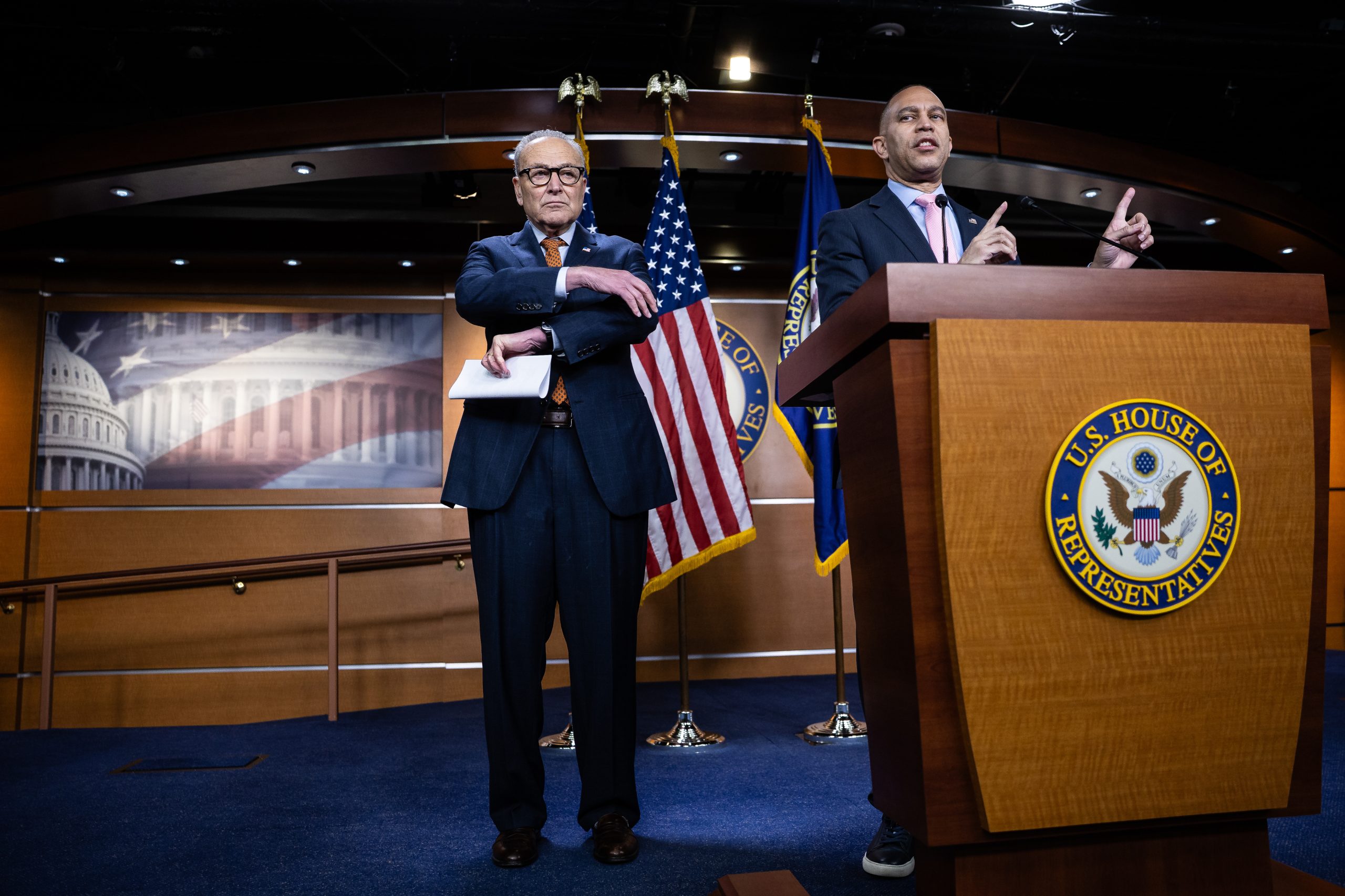
Democrats, meanwhile, hope the House vote will pressure Republican leaders in both chambers to compromise on the issue. At a news conference Thursday morning, House and Senate Minority Leaders Hakeem Jeffries and Chuck Schumer blasted Republicans for repeatedly refusing to back a clean extension before the subsidies expired last year.
“The American people should ask [Senate Majority Leader John Thune], ‘Are you willing to put this bill that the House now is moving forward on the floor of the Senate?’” Schumer said. “Most of the Republicans in the House and the Senate want to put poison pill riders about abortion on it. They are standing in the way.”
Jeffries is now especially emboldened, having made the calculation last fall that enough centrist Republicans would join Democrats in supporting a discharge petition to circumvent their own leadership and force a vote on three-year extension legislation.
“It’s an all-hands-on-deck effort that Democrats are committed to, to make sure we lower the high cost of living,” said Jeffries. “We’ll see what Republicans are willing to do to keep their word that they promised to lower the high cost of living in America.”
The question of whether to extend the enhanced subsidies, which were established in a 2021 Covid relief package under a Democratic majority, has been one of the most divisive policy issues of the 119th Congress.
Republican moderates started raising alarms early in the fall that their constituents were staring down massive premium spikes in 2026 due to the looming expiration of the subsidies. But they quickly encountered strong headwinds from conservatives who lambasted the credits as rife with fraud and giveaways to insurance companies — a message that has been echoed by Speaker Mike Johnson and House Majority Leader Steve Scalise.
Johnson’s office, in a last-ditch effort Thursday morning to undermine the effort, blasted out a memo accusing “Democrats [of] want[ing] to expand a COVID subsidy system already flagged for massive fraud and abuse, with absolutely zero reforms.”
Many Republicans also chafed at the prospect of voting to bolster Obamacare — which they have sought unsuccessfully to repeal dozens of times since its passage in 2010 — and demanded restrictions be put in place to bar the tax credits from going to plans that cover abortion services using separate funding, a nonstarter for Democrats.
The GOP moderates attempted to secure a deal with Johnson last fall to secure a floor vote to extend the subsidies as an amendment to a Republican-authored bill intended to lower health care costs, but talks broke down. It led four Republicans to agree to help Democrats get the requisite 218 signatures on their discharge petition to force a vote on the three-year extension bill.