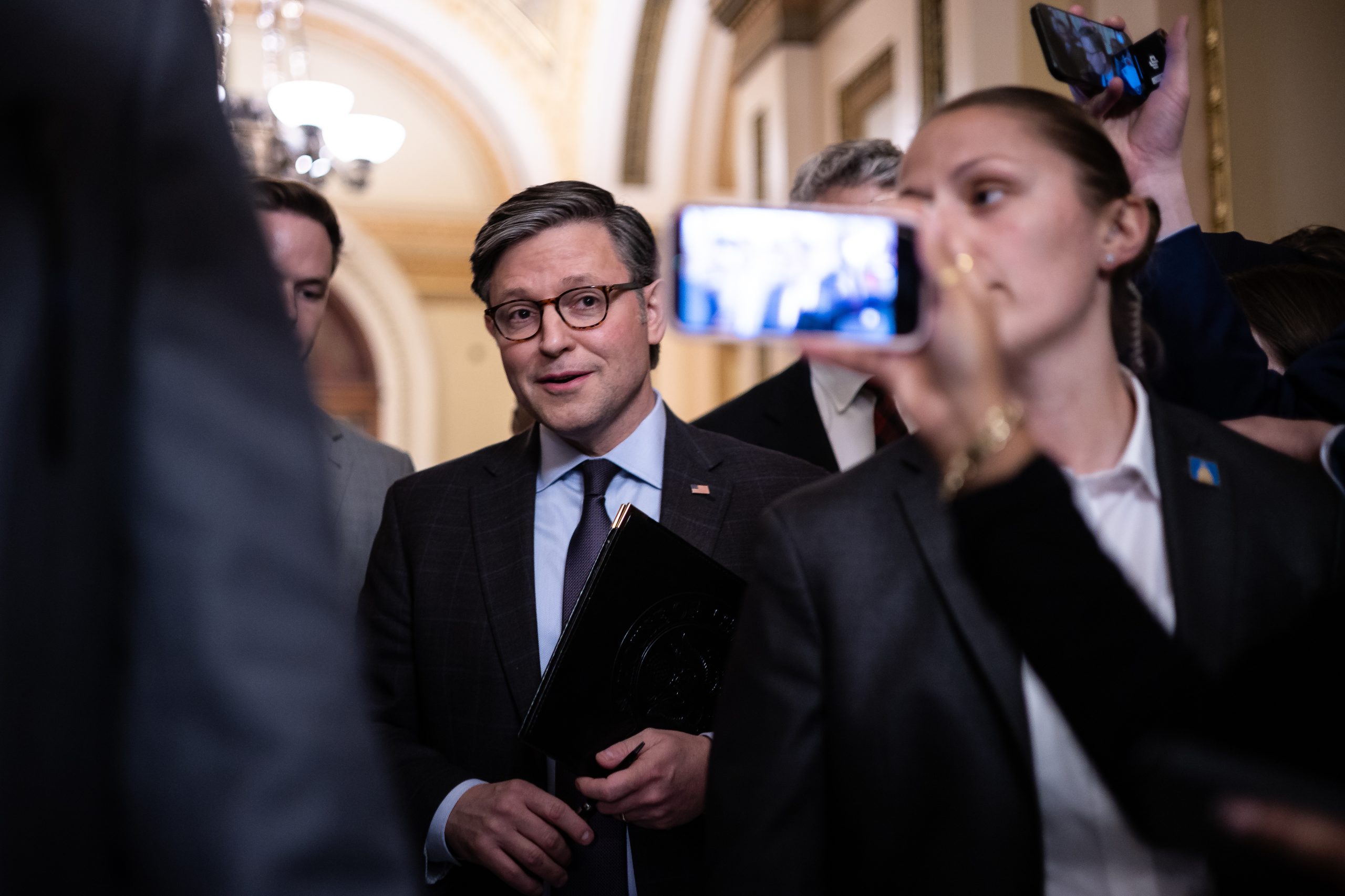
Republican leaders on Capitol Hill are scrambling to hammer out a host of complex, 11th-hour intraparty policy fights in the massive annual defense policy bill, delaying the release of final legislative text beyond the expected date of Thursday, according to four people granted anonymity to discuss the internal deliberations.
They are still pushing to release text of the sprawling bill by the end of the weekend, according to two of the people. But GOP leaders are going back and forth with White House officials about a raft of final issues, including Senate housing legislation that the administration wants but a key House committee chair opposes.
President Donald Trump and his deputies are eager to address housing costs, and top Trump pollster Tony Fabrizio told a closed-door meeting of House Republicans earlier Wednesday that Republicans need to focus more on housing issues ahead of next year’s midterm elections.
With White House officials digging in, congressional GOP leaders are now considering whether to add a revised or scaled down version of the Senate’s “ROAD to Housing” legislation to the Pentagon bill, but no final decisions have been made, according to the people. House Financial Services Chair French Hill has previously opposed the parts of the measure and said in a statement late Wednesday that “any housing package must have the buy-in” of his committee.
“Given our Conference has not seen any text, it’s unclear how we could support its inclusion in the NDAA,” Hill said.
Other issues GOP leaders are still working through include whether to add in new restrictions on U.S. investments in China, as well as provisions that would expand coverage for in vitro fertilization and other fertility services for military families under the Defense Department’s Tricare health system.
GOP leaders are reviewing the IVF expansion, which was included in both the House and Senate-passed defense bills. Pushed by Sen. Tammy Duckworth (D-Ill.), Rep. Sara Jacobs (D-Calif.) and others, the provision wasn’t included in last year’s defense bill amid concerns about the practice from some conservatives.
A spokesperson for Speaker Mike Johnson said in a statement that he “has clearly and repeatedly stated he is supportive of access to IVF when sufficient pro-life protections are in place, and he will continue to be supportive when it is done responsibly and ethically.”
The last-minute moves could weigh heavily on how easily Republican leaders can get the votes needed to pass the sprawling Pentagon bill, which the House aims to do next week.
The annual National Defense Authorization Act typically passes with broad bipartisan support. Johnson won passage of a hard-right version of the defense bill in September with just the support of a handful of Democrats, while the Senate cleared its own version with support from both parties.
Bipartisan leaders of the House and Senate Armed Services committees made quick work of their negotiations on a compromise defense bill, which largely concluded before Thanksgiving.
The legislation was then handed up to House and Senate leaders to hammer out what provisions that fall outside of Armed Services’ jurisdiction would be attached. Top lawmakers on those panels have cautioned against attaching unrelated issues that don’t have broad support and could tank the final bill.
House and Senate leaders have already had to retreat on some fronts. Trump urged lawmakers to include a contentious moratorium on state regulations for artificial intelligence backed by House Majority Whip Steve Scalise and other Republicans. But the effort foundered, and Scalise this week conceded the NDAA “wasn’t the best place for this to fit.”
Jasper Goodman contributed to this report.