Elon Musk’s latest comments highlight a balancing act at the centre of his artificial intelligence strategy.
Even as Tesla advances its own chip development and SpaceX deepens its AI ambitions, both companies are expected to continue buying Nvidia hardware at scale.
The update comes at a time when Tesla is building its next generation AI processor, preparing new software releases, and expanding into robotics.
It also follows the integration of xAI into SpaceX, signalling a broader effort to unify computing power across Musk’s ventures rather than rely on a single approach.
Tesla builds AI5 for autonomy and robots
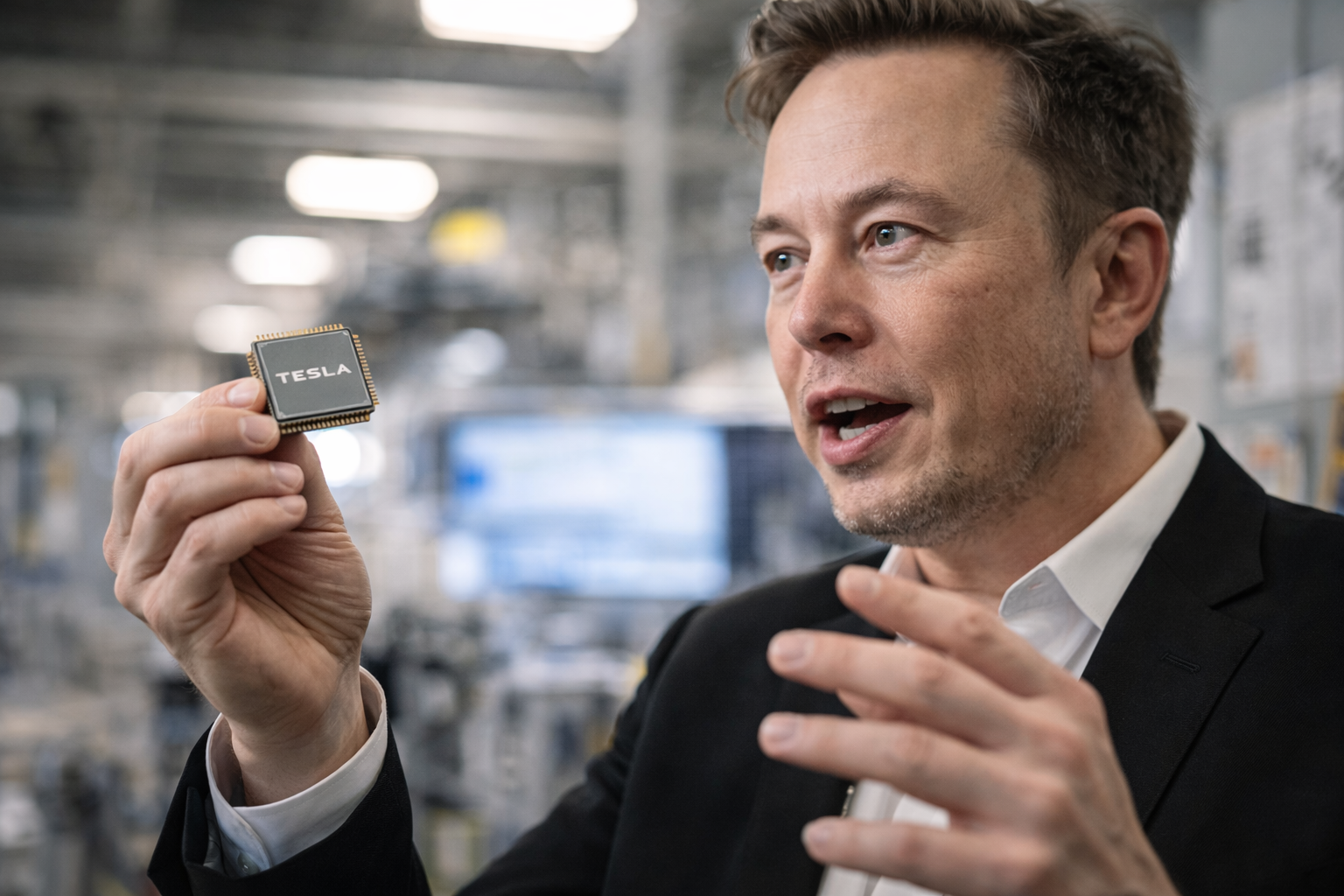
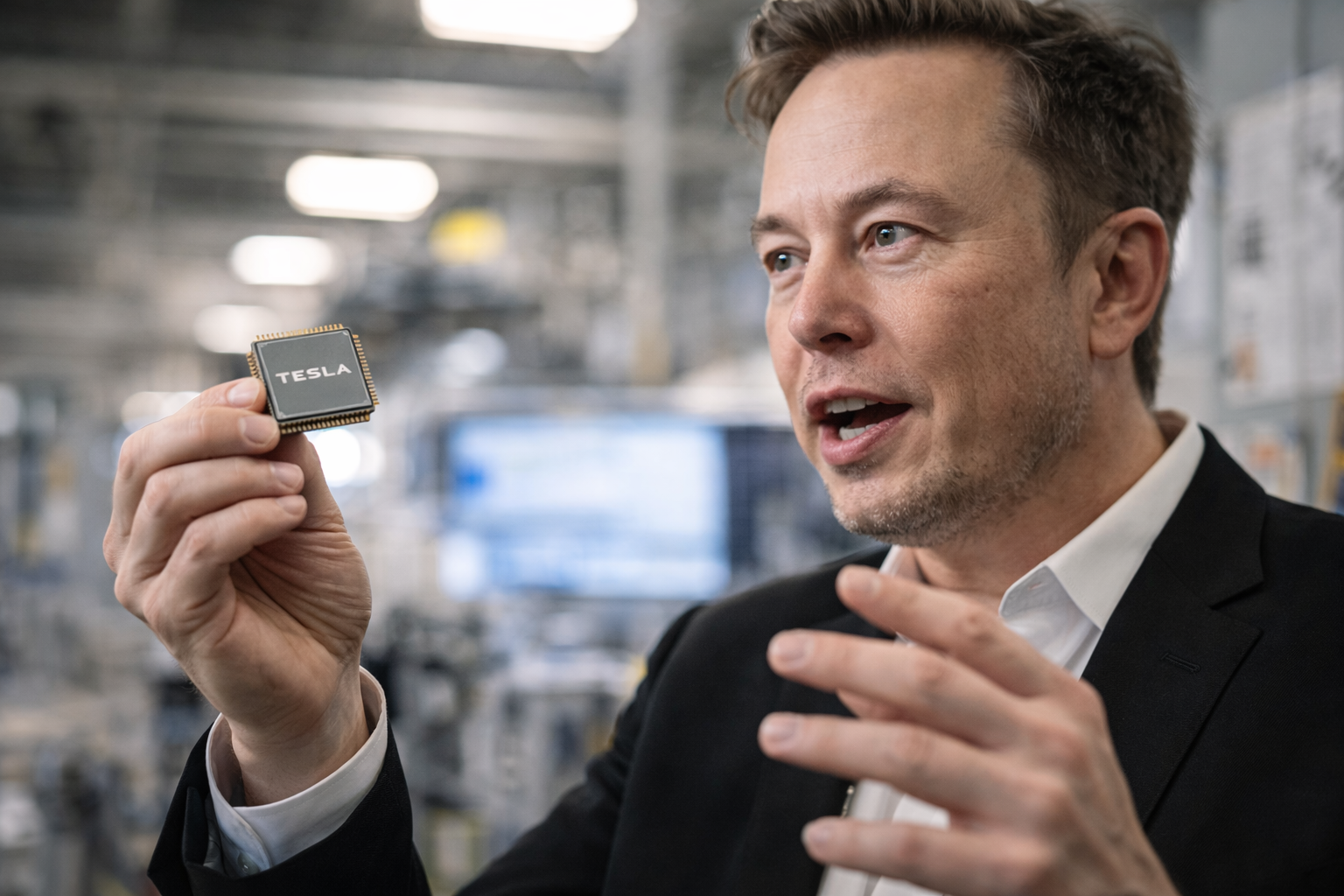
Tesla is designing its fifth-generation AI chip, known as AI5, to power its autonomous systems. The processor is expected to support Tesla’s Full Self Driving software, which remains central to its long term plans in mobility.
Musk indicated that the AI5 chip is not limited to vehicles. It is being developed for wider use cases including the humanoid robot Optimus and Tesla’s Robotaxi platform.
While the chip can be used for training workloads in data centres, it is primarily optimised for edge computing, where real-time decision making is required.
This approach allows Tesla to process data directly within cars and robots rather than relying entirely on remote infrastructure.
Nvidia remains critical to AI training scale
Despite this in house push, Musk said Tesla and SpaceX AI will continue ordering Nvidia chips in large volumes.
Nvidia hardware is widely used for training complex AI models and remains a key component of large-scale computing systems.
The continued reliance suggests that Tesla’s proprietary chips are designed to complement, rather than replace, Nvidia’s capabilities.
Training advanced models still requires significant computing power that is currently dominated by Nvidia’s ecosystem.
By maintaining these orders, Musk’s companies are ensuring access to established infrastructure while developing their own alternatives.
Software updates and Terafab rollout
Musk also shared updates on Tesla’s software pipeline. A wider release of the Full Self Driving Supervised update is expected within the next few weeks.
The rollout is likely to extend Tesla’s assisted driving features to a broader user base as development continues.
On the manufacturing side, Tesla’s Terafab project is set to launch within seven days.
The initiative is focused on producing artificial intelligence chips at scale, which could reduce reliance on external suppliers over time and support Tesla’s expanding hardware needs.
SpaceX AI signals deeper integration
The mention of SpaceX AI reflects a structural shift following SpaceX’s acquisition of xAI last month in an all-stock deal. The move comes ahead of a potential initial public offering for SpaceX later this year.
This is the first time Musk has referred to the combined entity as SpaceX AI, pointing to closer integration between space infrastructure and artificial intelligence development.
The unified structure could allow Musk to scale computing resources across Tesla, SpaceX, and related projects, particularly as demand for AI processing continues to rise.
The post Why Elon Musk is still buying Nvidia chips despite Tesla’s AI5 push appeared first on Invezz